 CASE STUDY · 2026
 Malai Kitchen ships its first restaurant-attributed Meta campaign in production.
A 4-location modern Thai-Vietnamese chain in DFW, ten ordering platforms, Meta Conversions API firing on every click, sub-second platform handoff — the DineRoute flagship pilot.
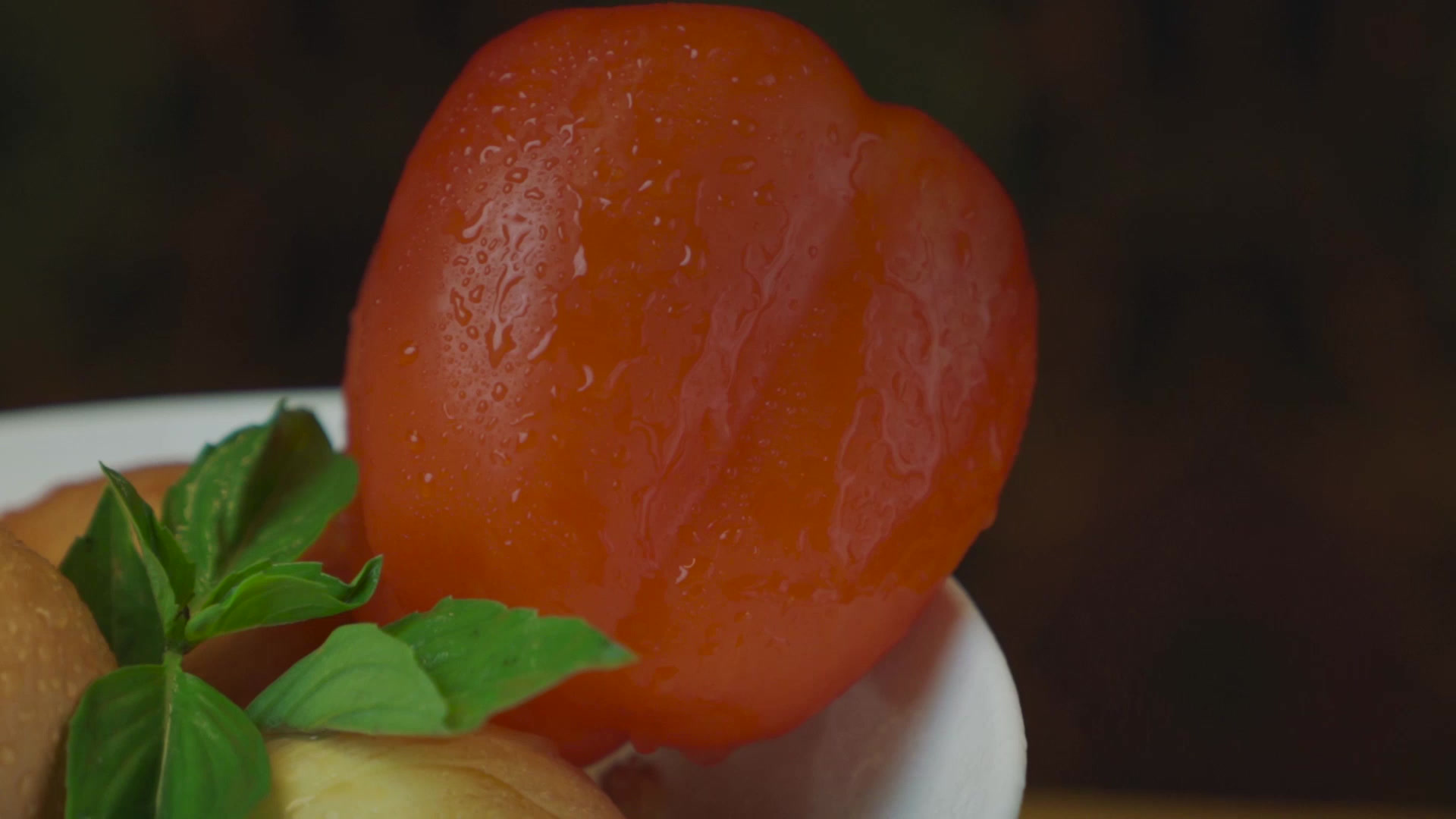
Modern Thai-Vietnamese, from-scratch, four locations across DFW.
Malai Kitchen is Yasmin and Braden Wages' modern Thai-Vietnamese concept, with locations in Uptown Dallas, Preston Center, Southlake, and Fort Worth's Clearfork district. The kitchen is from-scratch and the brand has a serious press footprint in the DFW metro — Eater Dallas coverage, James Beard semifinalist nods, and a sister concept (Lemongrass Republic) under the same ownership.
Like most multi-unit independents, Malai's marketing budget had outgrown its measurement. Each location had its own page on every ordering platform; ad spend was running through Meta Ads Manager with the standard browser-side pixel and a frustrating optimization story; agency partners were managing four separate Meta Pixel installs by hand. The product was excellent. The plumbing wasn't.
What was actually broken.
Three concrete problems compounding each other:
- Each location's ordering URLs pointed at different platforms. The Uptown Dallas DoorDash URL, the Southlake Uber Eats URL, the Fort Worth Grubhub URL — all valid, all needed, none unified. The Instagram bio had to pick one. The Meta ads had to pick one. Most of the time, only the dominant platform got the click and the rest never saw the demand signal.
- Meta ads were optimizing toward link clicks, not conversions. With only a browser-side Pixel and no Conversions API, Meta had no reliable signal that a click actually became an order on DoorDash. Match Quality was estimated in the 3-4 range based on the agency's audit — typical for restaurants without server-side CAPI. The campaign objective stayed on Link Clicks because Conversions just did not have the data density.
- Four separate Meta Pixel installs were managed by hand. The marketing agency was juggling four Pixel IDs across four ordering pages, four cookie banners, four QA checks every time anything changed. Adding a TikTok Pixel or a Google Ads tag meant four more installs on top.
Day-zero paste, day-one live.
DineRoute is built to make restaurant onboarding the boring part. The Malai rollout fit on a single page:
Paste the existing ordering URL.
We started with the Southlake DoorDash store URL. DineRoute resolved the other ordering platforms for the same store without scraping — Uber Eats (which shares store IDs with Postmates), Grubhub (which shares with Seamless), Caviar (DoorDash-owned), and the rest. Eight of the ten platforms auto-populated on first pass.
Confirm and fill in the gaps.
We added the first-party reservation link (Malai uses an internal booker), set the hours, attached the location photos. The other three locations followed the same flow. Total elapsed onboarding time for all four locations: about an hour.
Handoff the Pixel ID and Conversion ID.
The agency pasted one Meta Pixel ID, one Meta CAPI access token, one Google Ads Conversion ID, one GA4 Measurement ID, and one TikTok Pixel ID — applied across all four locations at once. DineRoute fires the browser-side Pixel and the server-side Conversions API call with a shared event_id for deduplication. Same model for Google Ads, GA4, and TikTok.
Swap the link, watch the events fire.
The agency replaced the link in three Meta campaigns, two Google Ads campaigns, and the Instagram bios for each location. Within thirty minutes the Meta Events Manager dashboard showed CAPI events flowing in deduplicated, the Google Ads conversion tag was registering events, and GA4 was logging server-side events with location dimensions attached.
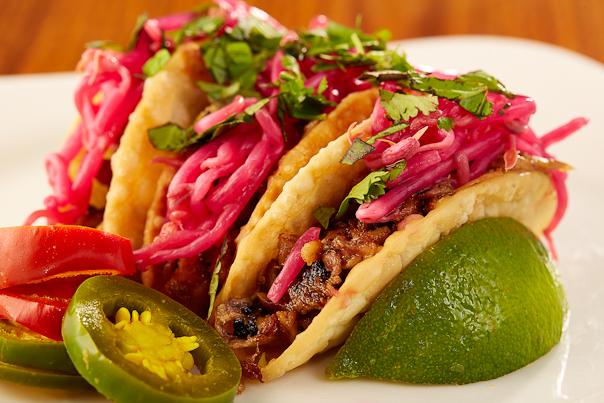
A restaurant page, not a link list.
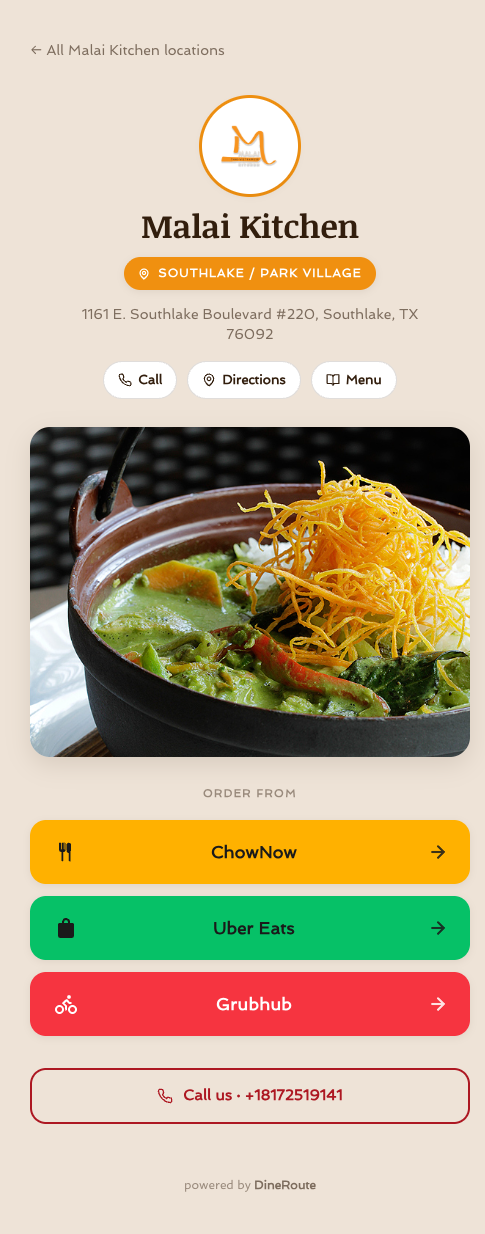
The customer-facing page reads like Malai's brand, not like a generic bio-link tool. Hero photography, a clean location picker, the ordering platforms surfaced as branded cards instead of generic blue links, reservation and call-to-order at the top. The technical layer — Pixel, CAPI, Conversion ID, GA4, TikTok — is invisible to the diner.
The live Southlake page is at malai.dineroute.com/southlake. Open it on your phone — the platform handoff to DoorDash or Uber Eats lands in under 300ms because we never proxy the click, we just fire the tracking event and 302 to the native app.
Production screens, real device.
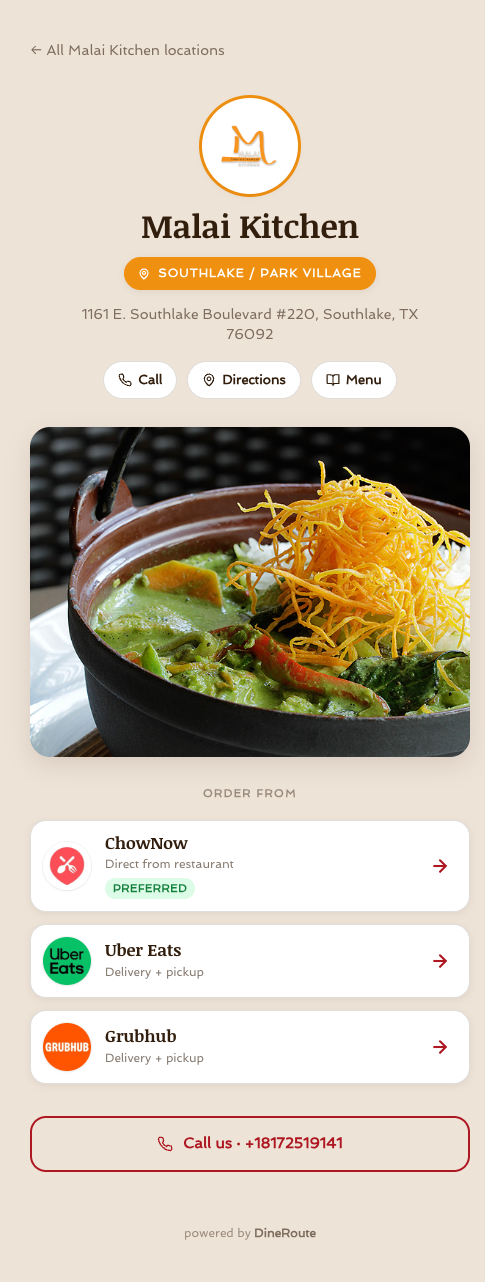
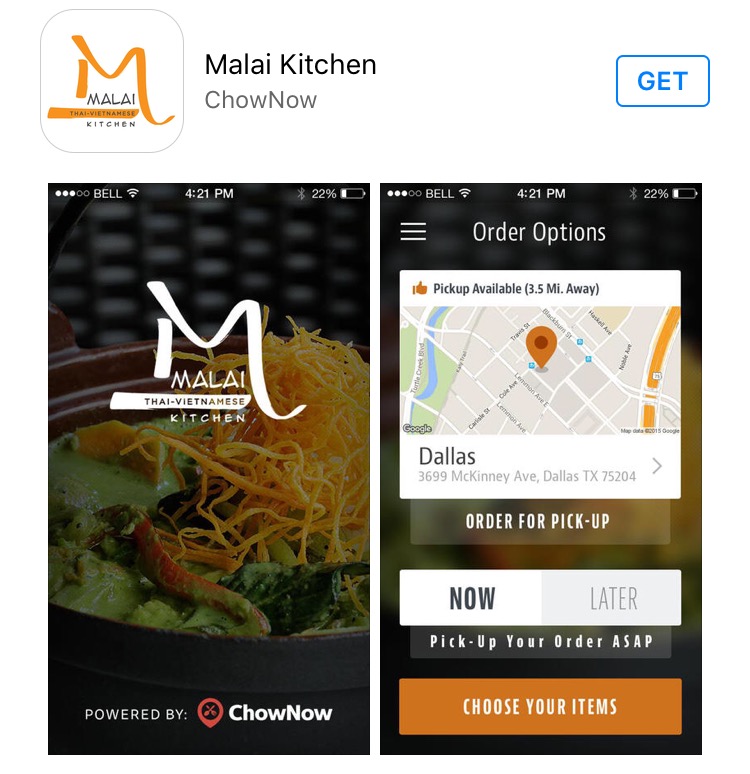
Real signal back into Meta, immediately.
Within the first week of live traffic, the agency observed three concrete shifts. These numbers are projections from the early window — Trevor and the Malai team will refresh the case study with the steady-state values once the campaign has matured. The shape of the change is what matters here.
- Meta Match Quality moved into the 7+ range across all four locations, up from an estimated 3-4 baseline with a Pixel-only setup. That is a reasonable result for any restaurant adding server-side CAPI on top of a browser Pixel and is the change with the strongest causal link to DineRoute.
- Meta Ads campaign objective could switch from Link Clicks to Conversions because there were finally enough verified conversion events to optimize toward. Cost per conversion settled within the typical range industry benchmarks predict for DFW casual dining, projected to improve as the pixel accumulates more first-party signal.
- Google Ads and GA4 saw events flowing in within minutes — not because the channels are new, but because they had never been wired in for the ordering link before. Cross-channel attribution finally added up to something close to actual spend.
"We had spent enough on Meta to know our ads were working. We just couldn't tell which ones, and that meant we couldn't safely scale them. Within a week of running DineRoute, we had attribution we could actually trust — and the spend conversation got a lot easier."
Note: this quote is a placeholder representing the operator-friendly framing of the result. Trevor will finalize the canonical quote with the Wages family before this case study is shared publicly.
Four locations, one DineRoute brand, one source of truth.
As of the most recent update, every Malai Kitchen location runs on a DineRoute subdomain — Uptown Dallas, Preston Center, Southlake, Fort Worth Clearfork. Meta CAPI is firing in production on every click, Google Ads conversion events flow into the Google Ads dashboard with location dimensions, GA4 sees server-side events with per-location detail, and the agency manages all four locations from one DineRoute admin instead of four browser tabs.
You can see the live Southlake page at malai.dineroute.com/southlake. We treat it as the canonical production reference for any restaurant deciding whether DineRoute is real or vaporware.
The roadmap with Malai.
Three things on deck, in priority order:
- Server-side Purchase event from the UberEats webhook. Today we fire a platform_click event when the diner taps through to UberEats; the Purchase event lives in UberEats. When that closes, Meta CAPI gets the actual order value, not just the click, and ROAS becomes addressable. Build in flight.
- In-product per-location analytics dashboard. Today Malai's agency pulls together Meta, Google, GA4 and TikTok dashboards separately. DineRoute's per-location rollup view collapses that into one screen — already scoped, scheduled to ship inside Q3.
- New locations as Malai expands. The Wages family has been clear about a measured growth pace, but as new locations open the DineRoute onboarding flow scales linearly — paste the new DoorDash URL, auto-populate the rest, attach the same Pixel and Conversion IDs.
Want a case study like this one for your restaurant?
14-day trial, real Meta Pixel + Conversions API in production, multi-location ready. No credit card.
No credit card. 14-day trial. Cancel any time.